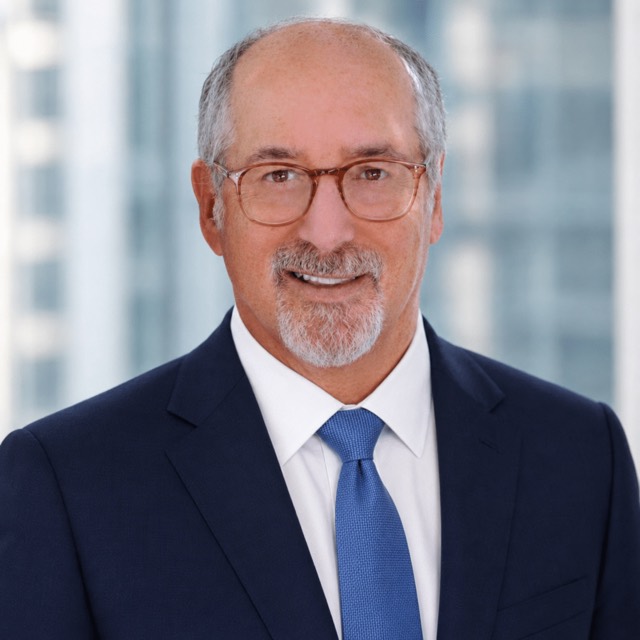
Three Decades Inside Financial Services
Bruce Goldstein is a registered Investment Banking Representative of Independent Investment Bankers, Corp. (“IIB”), Member FINRA/SIPC, and serves Windsor Drake as a non-exclusive Senior Advisor. His career has run through the institutions that fund the financial services industry rather than around them.
He brings more than thirty years of financial-services experience, including serving as a Managing Director at Keefe, Bruyette & Woods, as an initial member of Sandler O’Neill & Partners, as a Partner at Milestone Advisors, and as a Founding Partner of Middlemarch Partners. Keefe, Bruyette & Woods and Sandler O’Neill are two of the firms that defined financial institutions advisory in the United States.
Across those firms he has advised banks, private equity sponsors and financial services companies on strategic transactions, capital formation, operating structures and partnerships. He created a billion dollar marketplace for the assignment of Federal Home Loan Bank advances between member institutions, a piece of market infrastructure that let banks trade funding capacity with each other directly.
His registration history is a matter of public record and is published by FINRA. Windsor Drake links to it directly rather than summarizing it, for the reason set out below.
The Practice
Windsor Drake represents founders and owners in the sale of their companies. Bruce Goldstein advises the mandates where the company being sold is a financial services, fintech, payments or specialty finance business, and where the thing that determines the outcome is not the pitch but the plumbing.
These are transactions where a buyer’s diligence goes somewhere it does not go in ordinary software M&A. Who sponsors the BIN. What happens to the program if the sponsor bank exits. Whether the warehouse facility survives a change of control. Whether the servicing can be transferred, and to whom. Whether the loss curves hold outside the vintage the seller chose to present.
A seller who cannot answer those questions with documents rather than assurances loses price at exactly the point in the process where leverage has already shifted to the buyer. The practice exists to make sure those answers are prepared, sourced and defended before a buyer thinks to ask.
Where the Expertise Sits
His expertise spans the infrastructure of the financial-services industry, including sponsor-bank relationships and BIN sponsorship, Banking-as-a-Service and embedded finance, loan origination and servicing, asset-backed funding, consumer lending and payments.
Four areas of the financial services stack carry most of the diligence risk in a sale. Bruce Goldstein has worked in all four, on both sides of the table.
Sponsor-bank relationships and BIN sponsorship
A fintech that issues cards or moves money almost never holds the charter that makes it possible. It rents access, through a sponsor bank that owns the BIN and carries the regulatory relationship. That arrangement is the single largest concentration risk in most payments businesses, and it is frequently the item a seller has thought about least.
Buyers price sponsor-bank dependency directly. A program on one sponsor with no documented alternative, a contract with a short remaining term, or a sponsor under a regulatory consent order will each move a multiple, and in some cases will end a process. Bruce Goldstein has negotiated bank sponsorship both for clients and on his own behalf as an operator, which is a materially different vantage point from having read the agreements.
Banking-as-a-Service and embedded finance
Embedded finance businesses sit between a brand, a program manager and a bank, and the economics depend on where in that chain the value is captured and who owns the end customer. The structural question a buyer asks is simple to state and hard to answer: if the bank relationship changed tomorrow, what is left of this company?
The answer determines whether the business is valued as a technology company or as a distribution arrangement, and that distinction is usually worth more than any operating metric on the page.
Loan origination, servicing and asset-backed funding
For lenders and specialty finance companies, the funding structure is the business. Warehouse facilities, forward flow agreements, securitization capacity and residual economics decide what the enterprise is worth far more than headline origination volume does.
Two questions carry most of the value in a sale. Does the funding survive a change of control, and can the servicing be transferred without impairing the asset. Facilities that require lender consent on a transaction, or servicing that is effectively personal to the founder, are discovered by buyers if they are not disclosed by sellers, and they are cheaper to solve months before a process than during one.
Prime through non-prime, and underbanked segments
Credit businesses are valued on the durability of their loss performance, not on the strength of a single cohort. Buyers test whether performance holds across vintages, whether it was earned by underwriting or by an unusually benign period, and whether the segment carries regulatory attention that will follow the asset to a new owner. Sellers who present one flattering vintage lose credibility on the whole file when a buyer builds the rest.
Capital Structure Before a Sale
Windsor Drake is a sell-side only M&A advisory firm for founder-led software, fintech, and technology companies with enterprise values between $5 million and $300 million. It represents owners, and only owners. That has not changed and is not going to.
What Bruce Goldstein adds is the capital side of the same mandate. In financial services and specialty finance, a company is frequently not ready to be sold until its funding structure is ready to be diligenced, and the work that makes it ready is capital work: renegotiating a warehouse line so it does not terminate on a change of control, adding a second sponsor bank so the program is not a single point of failure, restructuring a facility whose covenants would frighten an acquirer, or arranging the funding that carries a business through the twelve months before it goes to market.
That is capital formation in service of an exit, done for the seller, before the seller is at the table. It is not a financing business run alongside the advisory business, and it does not put the firm across from its own clients.
The same logic covers the transactions that sit next to a full sale. A recapitalization that lets a founder take significant money off the table while continuing to run the company, a minority stake sale, or a management buyout are all owner liquidity events, and Windsor Drake advises on all three. What the firm does not do is raise capital for companies that are not its clients, or represent buyers. The line is who the firm works for, and it does not move.
Founders in financial services lose value in the funding structure long before they lose it in the negotiation. The work that protects the price happens months before a buyer is ever contacted.
As an Operator
Bruce Goldstein has been on the operating side of the businesses he now advises. He was a founding partner in a Mastercard issuing business and the founder of an online consumer lending company, which means he has personally negotiated bank sponsorship, built origination and servicing operations, and raised the funding that sits behind a loan book.
Windsor Drake weights that experience deliberately. An advisor who has only ever seen these structures in a data room understands what the documents say. An advisor who has signed them understands which terms were negotiable, which were theater, and where a buyer will actually push.
Registrations and Public Record
Bruce Goldstein is a registered Investment Banking Representative of Independent Investment Bankers, Corp. (“IIB”), Member FINRA/SIPC. Any services that IIB requires Bruce to perform through IIB are performed by Bruce in his capacity as an IIB registered representative and subject to IIB supervision.
His registration, examination and employment history are maintained by the Financial Industry Regulatory Authority and are publicly searchable under CRD number 2288224.
Windsor Drake links to that record rather than paraphrasing it. Credentials that cannot be checked are not credentials, and a firm asking to represent the largest transaction of an owner’s life should expect to be verified rather than believed. The record is available through FINRA BrokerCheck.
- Registration Investment Banking Representative, Independent Investment Bankers, Corp. (IIB), Member FINRA/SIPC · individual CRD 2288224
- Previously Managing Director, Keefe, Bruyette & Woods · initial member, Sandler O’Neill & Partners · Partner, Milestone Advisors · Founding Partner, Middlemarch Partners
- Sector coverage Fintech, payments, consumer lending, specialty finance, bank sponsorship, Banking-as-a-Service, embedded finance
- Based South Florida, advising financial services and technology companies throughout the United States
A Confidential Conversation
Owners of financial services, fintech and specialty finance companies contact Windsor Drake at very different points: holding an unsolicited offer, a year out from a process, or simply wanting to understand what a buyer would find. Bruce Goldstein takes those conversations directly.
Inquiries are handled discreetly. If a sale is not the right answer, the firm says so. Request a confidential consultation, or read how the firm runs a process in How We Run a Sale.