The Mandate
In industrial businesses the value sits in throughput, contracts, installed base and people, not in a revenue multiple, and a buyer’s diligence goes straight to the plant floor. The advisory work has to start there too.
Windsor Drake represents founders and owners of manufacturing, fabrication, automation and industrial services businesses in a sale, recapitalization or generational transition. The firm represents founder-led companies with enterprise values of $5 million to $300 million, and takes fewer than twenty mandates a year so each one gets senior attention from first meeting through close.
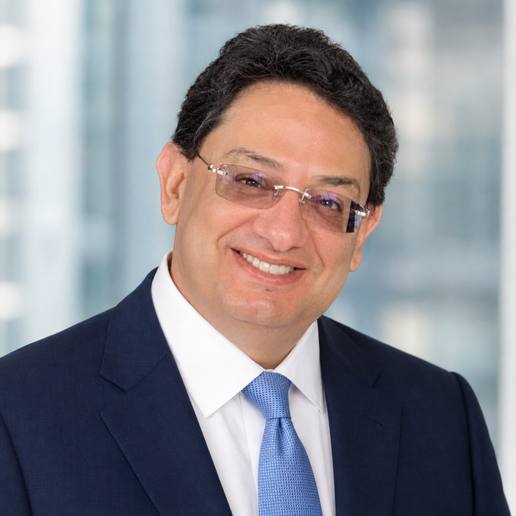
The firm’s industrials and advanced manufacturing work is advised by Mel Gabriel, Ph.D., P.Eng., a twenty-five-year operator of technology-enabled industrial businesses who has run the plants, carried the P&L, and sold companies he helped build.
Where the Work Concentrates
Founder-led manufacturing and fabrication
Businesses built by an owner-operator over decades, where the founder is still the commercial relationship and the operating system both. The central question in a sale is what survives the founder’s departure, and it is answered on the shop floor rather than in the model.
Automation, robotics and industrial technology
Where a traditional manufacturer has built genuine automation capability, the buyer universe widens and the multiple moves. Distinguishing durable technical advantage from a well-run machine shop is the whole exercise, and it determines which acquirers see the company as strategic rather than as capacity.
Infrastructure and capital-intensive services
Contracted revenue, regulated counterparties and heavy assets price differently from product businesses. Institutional infrastructure buyers run a distinct diligence playbook, and sellers who prepare for it from the inside of the asset rather than the outside of the data room keep control of the process.
Succession-driven founder transitions
The largest category in Canadian lower middle market industrials, and the one least well served: owners in their sixties and seventies with no obvious internal successor, a business that has never been marketed, and a set of assumptions about what it is worth that have never been tested. A generational transition run as a competitive process is a different outcome from a bilateral sale to the first acquirer who calls.
A founder who has run the plant asks a buyer different questions than one who has only read the reports, and gets different answers.
Senior Advisory
Mel Gabriel, Ph.D., P.Eng., serves as Senior Advisor on Windsor Drake’s industrials, advanced manufacturing and succession-driven engagements. He has managed multi-site manufacturing across seven countries, delivered capital programs measured in the billions, held senior leadership roles at Magna International and Bombardier Aerospace, and was inside Synagro Technologies through its sale from EQT Infrastructure to Goldman Sachs’ West Street Infrastructure Partners. He holds a Ph.D. in Management Sciences from the University of Waterloo, teaches at Waterloo and at the Schulich School of Business, and is a licensed Professional Engineer.
He brings the operator’s lens to positioning, the buyer’s underwriting perspective to valuation, and a founder’s understanding of what the sale of a life’s work actually involves. His full background, including his published research and faculty listings, is on his profile.
How the Firm Runs a Sale
Windsor Drake runs a documented sell-side process across six gated phases over roughly nine months, presenting each company to a curated universe of 150 to 300 qualified acquirers. The process is described in full in How We Run a Sale.
Owners considering a sale, a recapitalization or a generational transition can speak with the firm directly. Inquiries are handled discreetly. If a sale is not the right answer, the firm says so.